
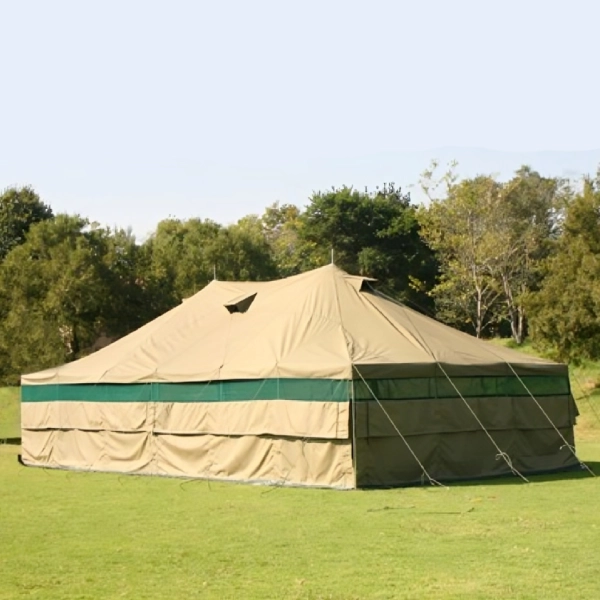
Key Features of Canvas Peg and Pole Tents:
- Frame Structure:
- Poles: The poles are typically made from strong materials such as steel, aluminum, or wood, providing the necessary support for the tent. The poles create the framework that holds up the canvas, forming a structure that can be adjusted to various sizes and shapes.
- Pegs: Pegs (also known as stakes or tent pins) are used to anchor the canvas tent to the ground. These pegs are driven into the earth, ensuring the tent remains stable, even in windy conditions. The pegs are especially important for securing the canvas to prevent it from flapping or being blown away.
- Design: The traditional peg and pole tents often have a high peak, creating more interior space and making them more comfortable for standing and moving around. The design can be more open and flexible compared to modern pop-up tents, making them suitable for larger gatherings or events.
- Canvas Material:
- Durability: Canvas is the material of choice due to its strength and resilience. It is typically made from cotton or a cotton-blend fabric, which is breathable, durable, and water-resistant. Canvas is often treated with coatings to enhance its weather resistance, ensuring that it holds up well in rainy or windy conditions.
- Waterproofing: The canvas used in peg and pole tents is generally treated with a waterproof coating or waterproofing spray to prevent water ingress during rain. Some models come with a separate rainfly or additional weatherproof features.
- Breathability: Canvas allows for good airflow, reducing condensation inside the tent and making the environment more comfortable during warm weather.
- Interior Space:
- Spacious Design: Canvas peg and pole tents typically offer large interior spaces with high ceilings, making them ideal for group camping, events, or glamping. The open design allows for easy movement, and some models even include separate rooms or partitions that can be used to divide the space.
- Flooring: Many canvas tents come with integrated, durable PVC or canvas flooring that helps protect the interior from water and dirt. Some models have removable or raised floors to improve comfort and prevent moisture from seeping in.
- Ventilation: The design often includes mesh windows and vents that help promote air circulation, especially during warmer weather. The canvas material itself is breathable, and the addition of windows or roof vents improves the ventilation system.
- Weather Resistance:
- Wind Resistance: The combination of a sturdy pole frame and the canvas material makes these tents relatively resistant to wind. Pegs are crucial for stabilizing the tent in windy conditions. However, these tents are generally best suited for moderate weather conditions.
- Rain Protection: With proper waterproofing and the addition of rainflies, canvas peg and pole tents provide excellent protection against rain. Some tents are designed with overlapping seams to ensure that rainwater doesn’t seep in at the connections.
- Temperature Regulation: Canvas is naturally insulating, which helps regulate the temperature inside the tent. It keeps the interior cooler in summer and warmer in winter compared to synthetic materials.
- Ease of Setup:
- Manual Setup: Peg and pole tents require a bit more effort to set up compared to modern pop-up or instant tents. The frame must be assembled by positioning the poles into place and securing the tent with pegs. While the process is generally straightforward, it may take more time and effort, especially for larger models.