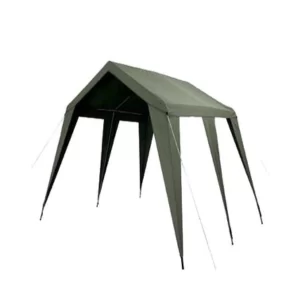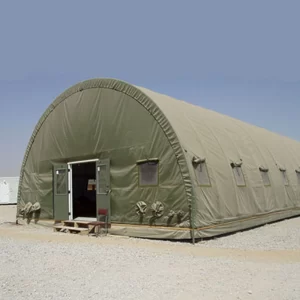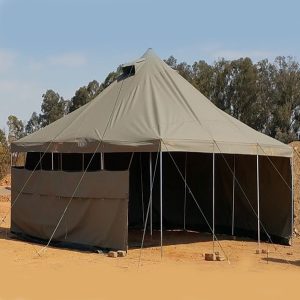
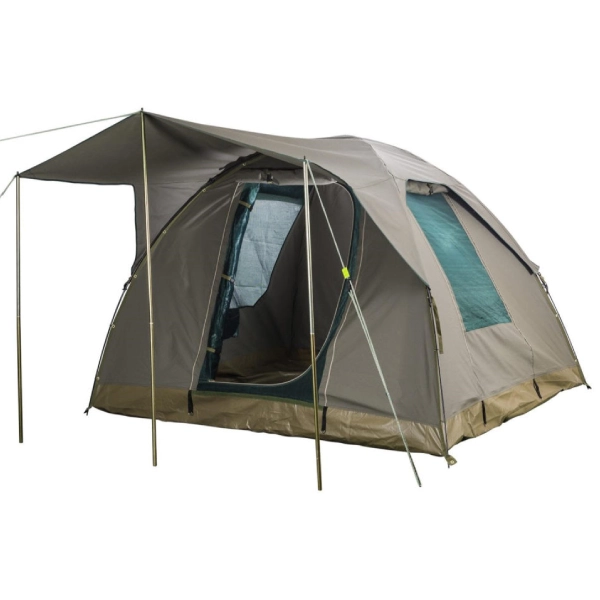
Here’s a breakdown of the typical features, pros, and key details you might want to look for when considering canvas bow tents:
Canvas Bow Tent Features:
- Design and Structure:
- Shape: As the name suggests, these tents have a curved (bow) structure, which is often more stable and wind-resistant than traditional flat-roof tents.
- Frame: The frame is usually made of steel or aluminum poles that create a rounded, arch-like shape. Some models use wooden poles for a more rustic aesthetic.
- Setup: Canvas bow tents generally require more effort to set up than standard tents, but they offer greater interior space and stability in harsher weather conditions.
- Canvas Material:
- Cotton Canvas: The main material used for these tents is cotton canvas, which is known for being breathable, durable, and weather-resistant. Cotton also helps regulate the temperature inside the tent, keeping it cool in hot weather and warm in cold weather.
- Waterproofing: High-quality canvas is usually treated with water-resistant coatings like paraffin wax or polyurethane to make it water-repellent, though some may require reapplication over time.
- Weight: Canvas tents are typically heavier than synthetic tents because of the material’s thickness and the sturdiness of the frame. This makes them less suitable for backpacking but ideal for car camping or base camps.
- Ventilation:
- Canvas tents have excellent natural ventilation because of the breathability of cotton. Many models also include mesh windows or vents to improve airflow and reduce condensation inside the tent.